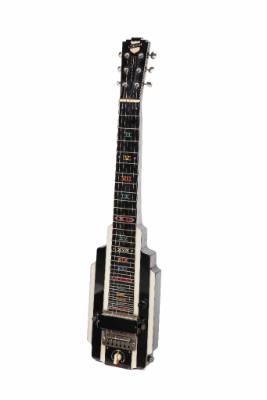
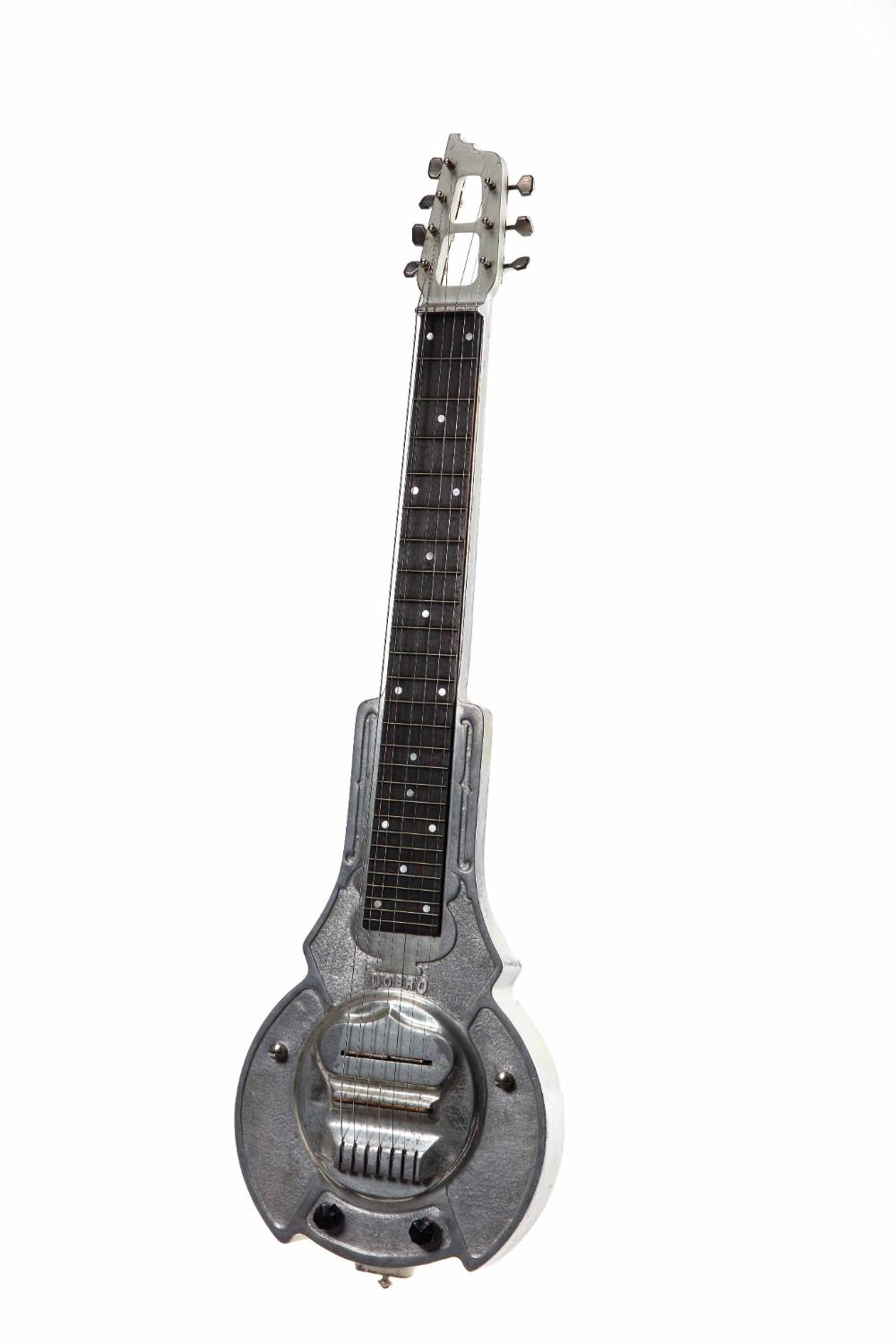
Electric Hawaiian guitar
ALTERNATE NAME(S)
- Lap steel guitar
Date1936-1937 ca.
Place MadeChicago, Illinois, United States, North America
ModelDobro
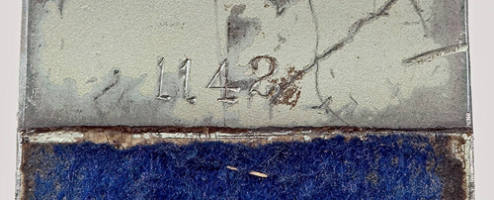
Serial No.1142
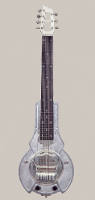
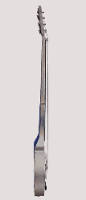
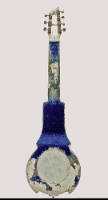
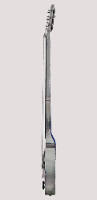
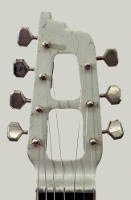
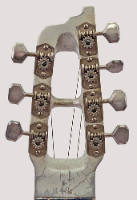
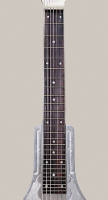
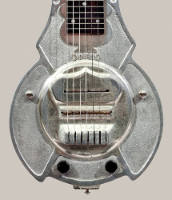
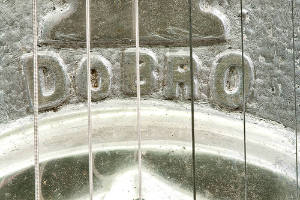
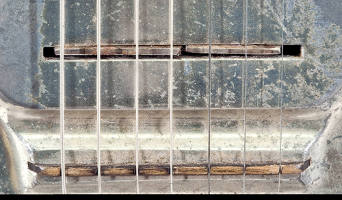
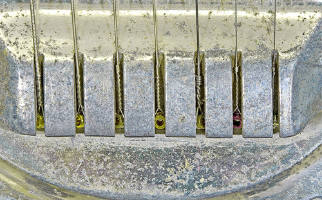
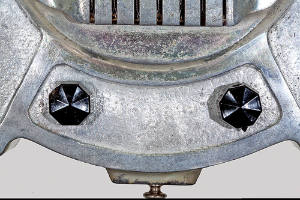
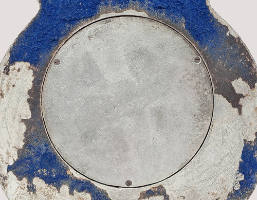
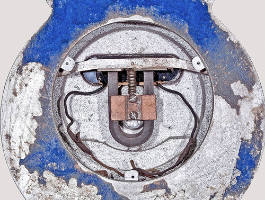
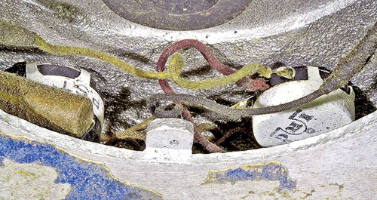
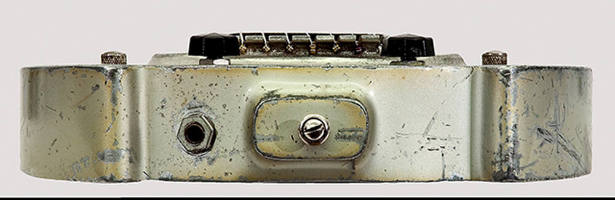
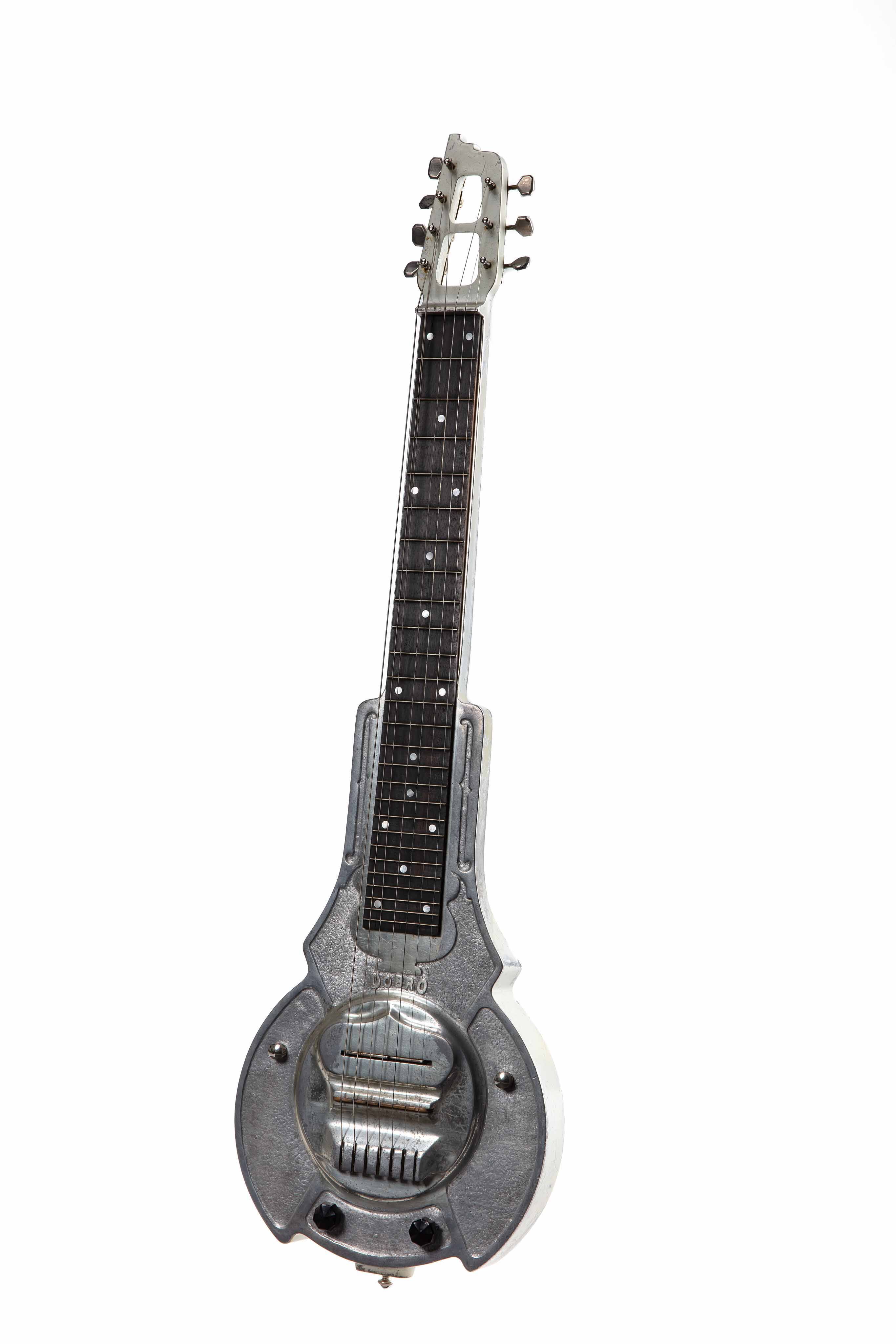
SignedLocated on body: DOBROMarkingsOn back of neck: 1142DescriptionThe National and Dobro companies originally produced spun-aluminum cone resonator guitars in the 1920s. In 1935, these competitors merged under the leadership of the original inventors, the Dopyera brothers. While resonator guitars were much louder than all-wood-bodied instruments, they were still no match for electrics, and the National Dobro Company introduced this cast aluminum electric guitar in the Fall of 1935.Seven-stringed, lap steel ("Hawaiian") guitar, cast aluminum body with decorative recessed area (see Electric Guitars and Basses, page 14, copy in file). Features height adjustment knobs, tone and volume controls (two black plastic, two metal), split blade pickup. Removable circular plate held in by three screws on back of instrument. Back covered with blue felt, parts of the instrument painted gold.DimensionsHeight: 36.5" (923 mm)
Body Width: 5.5" (265 mm)
Fingerboard Length: 19 5/8" (500 mm)
Vibrating String Length: 25" (633 mm)ProvenancePreviously owned by Walter Carter, Nashville, Tennessee.Published ReferencesTimothy D. Miller. The Origins and Development of the Pedal Steel Guitar. M.M. Thesis. Vermillion: University of South Dakota, 2007.
Credit LineBoard of Trustees, 1999
Object number06756
On View
Not on view