

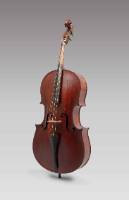
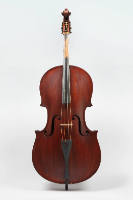
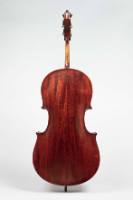
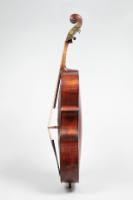


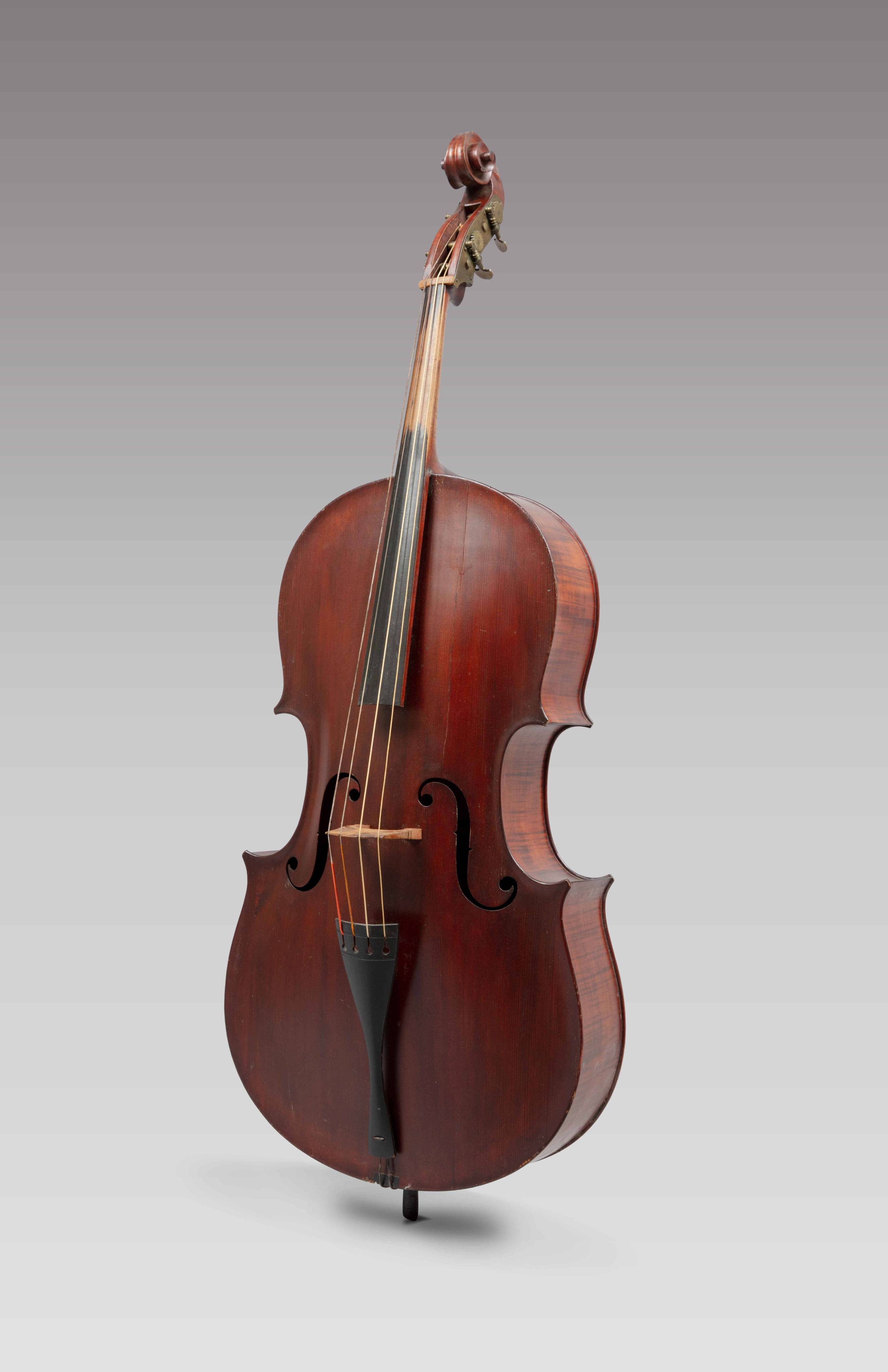
Bass viol
Maker
Abraham Prescott
Distributor
Henry Prentiss
Date1826-1833 ca.
Place MadeDeerfield, New Hampshire, United States, North America
Serial No.None
SignedThe oversize label is printed in black ink, has a decorative border, and features a central wood-engraving including an open umbrella, a keyed bugle, a clarinet, a valveless horn, and a flute. This engraving is signed with the initials, "N.D. Sc. The label is positioned just the opposite way from the usual violin-maker's label, and is read "upside-down," so to speak. The lengthy text follows:HENRY PRENTISS,
COMMISSION STORE,
UMBRELLAS, PARASOLS,
MUSICAL INSTRUMENTS &c
52 [engraving described above] Court Street
OPPOSITE THE NEW ENGLAND
MUSEUM, BOSTON,
Has constantly on hand Musical Instruments of every description, comprising as
great a variety as can be found in any Store in this or any other City.
Silk, Cotton and Oil Cloth Umbrellas; Sword and other Canes, Clarionetts; Flutes;
Flageolets; Fifes; Large and Small Drums; Violins; Bass and Double Bass Viols;
Bass Horns of Wood and brass, with extra keys; Bassoons; Serpents; Bass, Tenor
and Alto Trombones; French Horns; Kent and E. flat Bugles; Trumpets; Hunting
Horns; Cymbals; Violin, Bass and Double Bass Viol Strings and Bows; Bridges;
Pegs; Tuning Forks, with sundry other articles.
Clarionetts, from 5 to 13 keys (silver or brass) manufactured to order, in the first
style, best materials, and at the shortest notice.
[pointing hand] All kinds of Musical Instruments repaired, and additional keys furnished at a reasonable price; Whalebone cut to pattern, and all kinds of Wood, Ivory and Brass
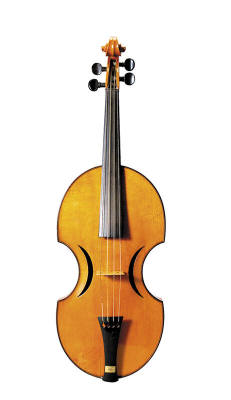
turning, neatly executed.DescriptionThis bass viol, an American cello-like instrument in a larger size, is in a remarkably pure, original state of preservation. Bass viols were commonly used with church choirs to help the singers maintain pitch and melody. Abraham Prescott was among the most prominent and prolific of the New England bass viol makers. This viol was made for sale for Henry Prentiss who operated a general store which sold many items, including instruments. See the label text field for a list of goods Prentiss handled, as described on the instrument's label.
Top: two-piece spruce or pine
Back: two-piece quarter-cut maple: narrow, irregular horizontal curl
Ribs: two-piece quarter-cut maple: narrow, irregular curl; set into grooves carved in top and back
Head and Neck: narrow curl
Varnish: dark red
Fingerboard: black-painted maple; scooped under neck position; deeply hollowed end
Tailpiece: black-painted maple; no saddle; two decorative deeply carved lines above and below keyhole string holes, from side to side
Tuners: two pairs of brass worm-gear tuners with brass plates
Endpin: black-painted hardwood; short
F-holes: long, rounded wings; inner notch much higher than outer notchProvenancePurchased by the Board of Trustees from Skinner, Inc. in Boston, Massachusetts in May of 1995. Published ReferencesAndré P. Larson. “Mazzeo Collection a Highlight . . . 1995 Acquisitions Include Rare
Clarinets, Vintage Strings.” _The Shrine to Music Museum Newsletter_ 23, no. 3 (January 1996):1-4.
Arianna Van Kley and Michael Suing. _Of Thee I Sing: Origin, Heritage, and Patriotism_. National Music Museum, 2026: 32-33.
Credit LinePurchase funds gift of Martin P. Busch, 1995
Object number05885
On View
On view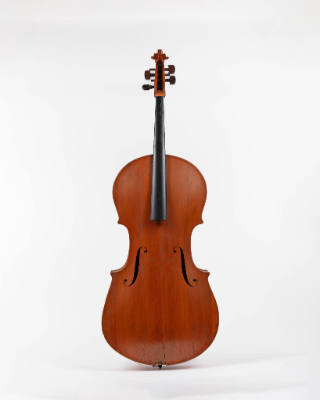
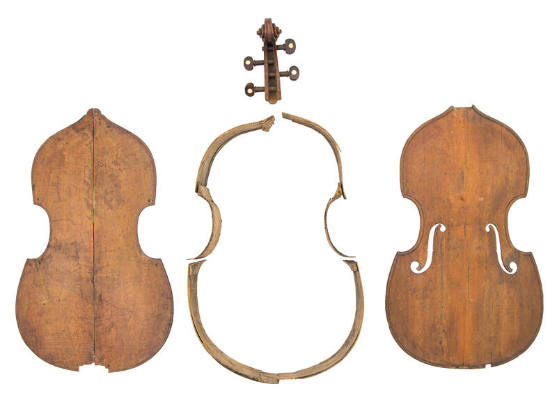
1700-1750 ca.