


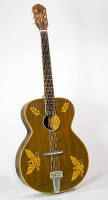



Guitar
Date1946 ca.
Place MadeChicago, Illinois, United States, North America
ModelK6116
Serial No.L516 6116
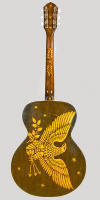
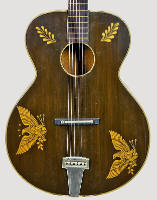
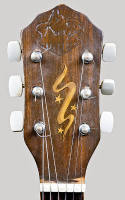
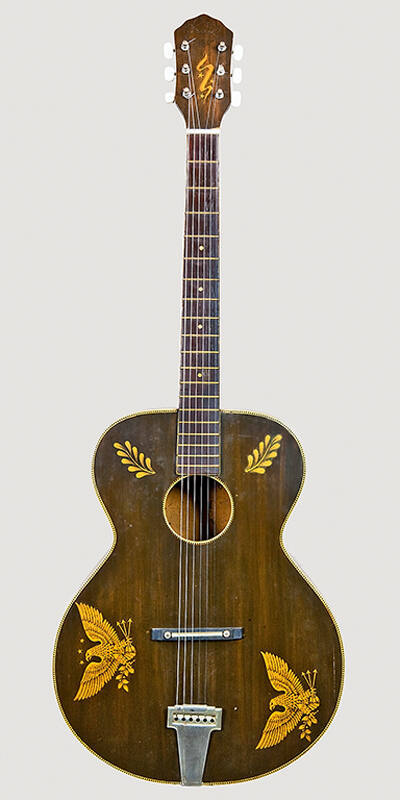
SignedIncised into head, under finish, the lettering enclosed in an abstract line, perhaps corresponding to the geography of a territory: KayMarkingsRubber-stamped in black ink on inside of back, visible below soundhole, and on inside of top to bass side of soundhole: L516 6116Rubber-stamped in black ink on inside of back, visible below soundhole: 2[3 illegible digits] 46DescriptionThis guitar, made just after WWII, was personalized by a patriotic owner. Unlike some later Kay K6116 model guitars, it features a tailpiece and movable bridge. Kay, based in Chicago, was known for producing inexpensive instruments that provided an entry point for aspiring musicians.
Stringing: six steel strings
Soundboard: two-piece spruce; fine grain
Back: one-piece slab-cut birch
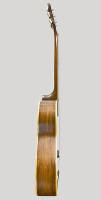
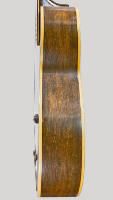
Ribs: two-piece, slab-cut birch; no end graft
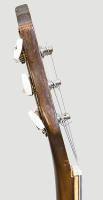
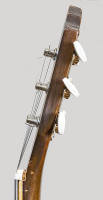
Head: birch; integral with neck
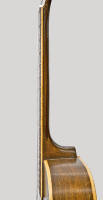
Neck: birch; integral with head
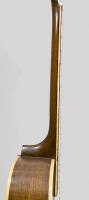
Heel cap: none; neck heel recessed from back
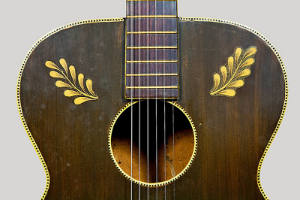
Binding: ivory celluloid; trim on top comprised of alternating blocks of ivory and black celluloid, with ivory celluloid strip on inside
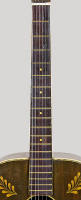
Fingerboard: rosewood bound with ivory celluloid; 19 brass frets; ivory celluloid dots behind 5th, 7th, 9th, and 12th frets
Nut: white plastic; probably later
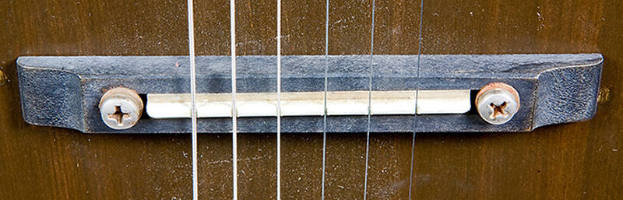
Bridge: black-stained maple with adjustable white plastic saddle; later; drill holes for original bridge visible under finish
Tailpiece: nickel-plated, stamped, sheet steel with raised geometric design; secured to lower rib with one domed headed slot-head screw
Tuners: nickel-plated steel with decoratively rolled plates and white plastic heads
Endpin: brass
Rosette: none; ivory celluloid soundhole binding with trim comprised of alternating blocks of ivory and black celluloid, with ivory celluloid strip on inside
Pick guard: none; drill holes from previous pickguard, now missing
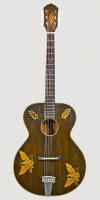
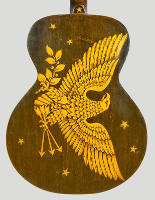
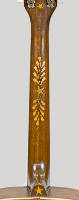
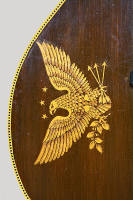
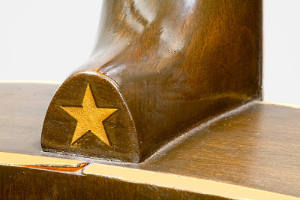
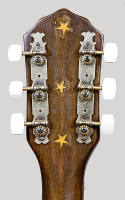
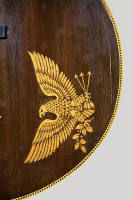
Finish: semi-translucent army-green paint with the following brown and gold decals: star and ribbon decal on front of head, three-star decal on back of head; star and leaves on back of neck; star on back of neck heel, large eagle holding three arrows and leaf branch on back, six stars on back, two leaves on upper bouts of top, and two eagles holding three arrows and leaf branch on lower bouts of top
Linings: kerfed birch
Neck block: birch with beveled corners
End block: birch
Top braces: four spruce ladder braces with tapered ends; spruce grafts on each side of soundhole
Back braces: three spruce with tapered endsDimensionsTotal guitar length: 1037 mm (40-13/16″)
Back length: 506 mm (19-15/16″)
Upper bout width: 247 mm (9-23/32″)
Waist width: 226 mm (8-29/32″)
Lower bout width: 393 mm (15-1/2″)
Rib height (including edging) at heel: 92 mm (3-5/8″)
Rib height, at waist: 100 mm (3-15/16″)
Rib height, at end block: 103 mm (4-1/32″)
Head length: 171 mm (6-23/32″)
Head width, top: 80 mm (3-1/8″)
Head width, bottom: 72 mm (2-27/32″)
Neck length (nut to ribs): 362 mm (14-1/4″)
Neck width, nut: 42 mm (1-21/32″)
Neck width, heel: 54 mm (2-1/8″)
Soundhole diameter: 88 mm (3-15/32″)
Vibrating string length (nut to bridge edge): 661 mm (26″)ProvenanceNo known provenance. Published ReferencesArianna Van Kley and Michael Suing. _Of Thee I Sing: Origin, Heritage, and Patriotism_. National Music Museum, 2026: 70-71.
Credit LinePurchase funds gift of Jean M. Abramson Estate, 2009
Object number14409
On View
On view