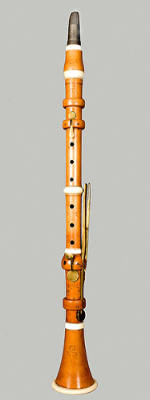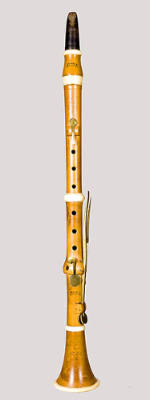
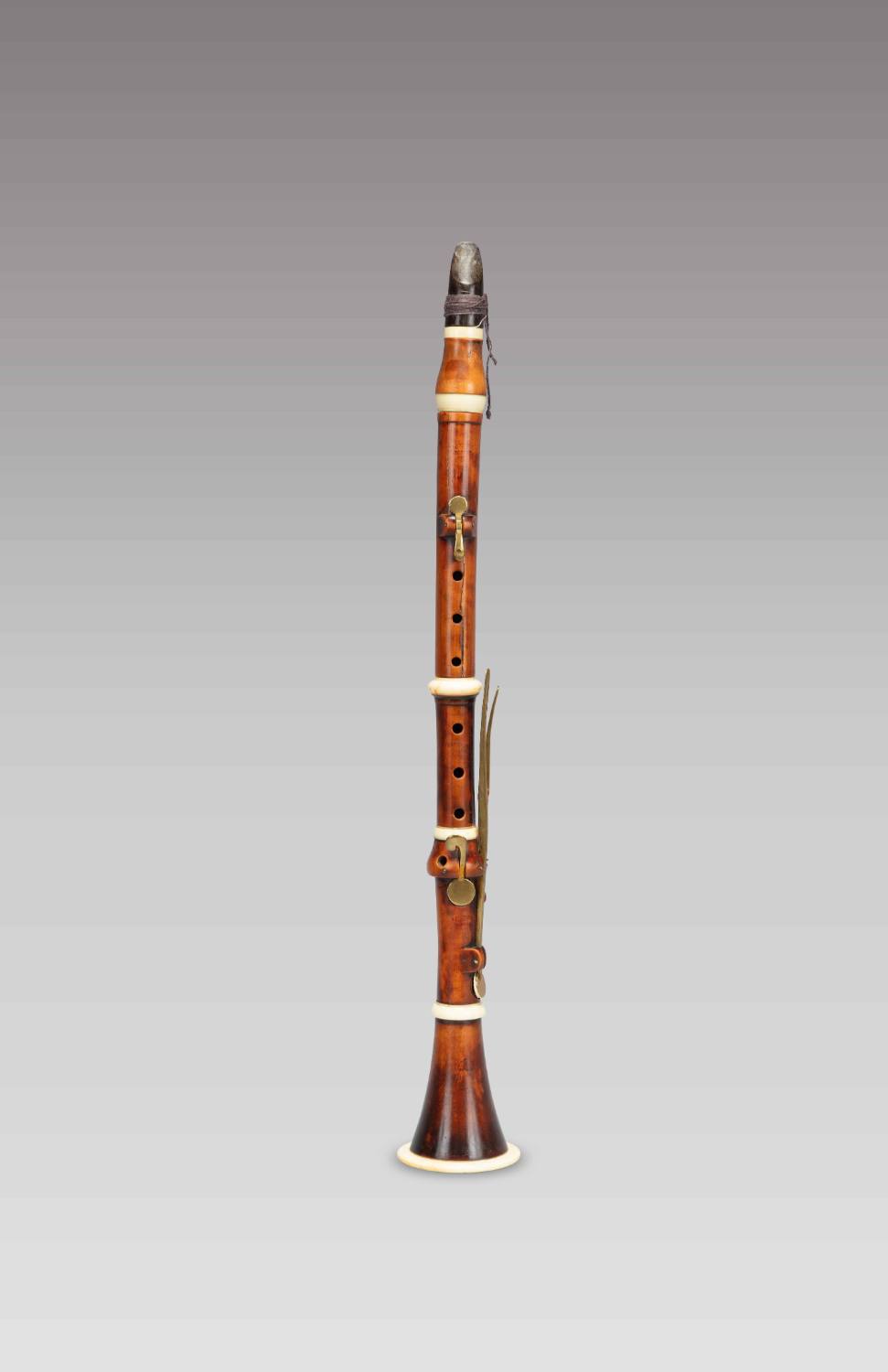



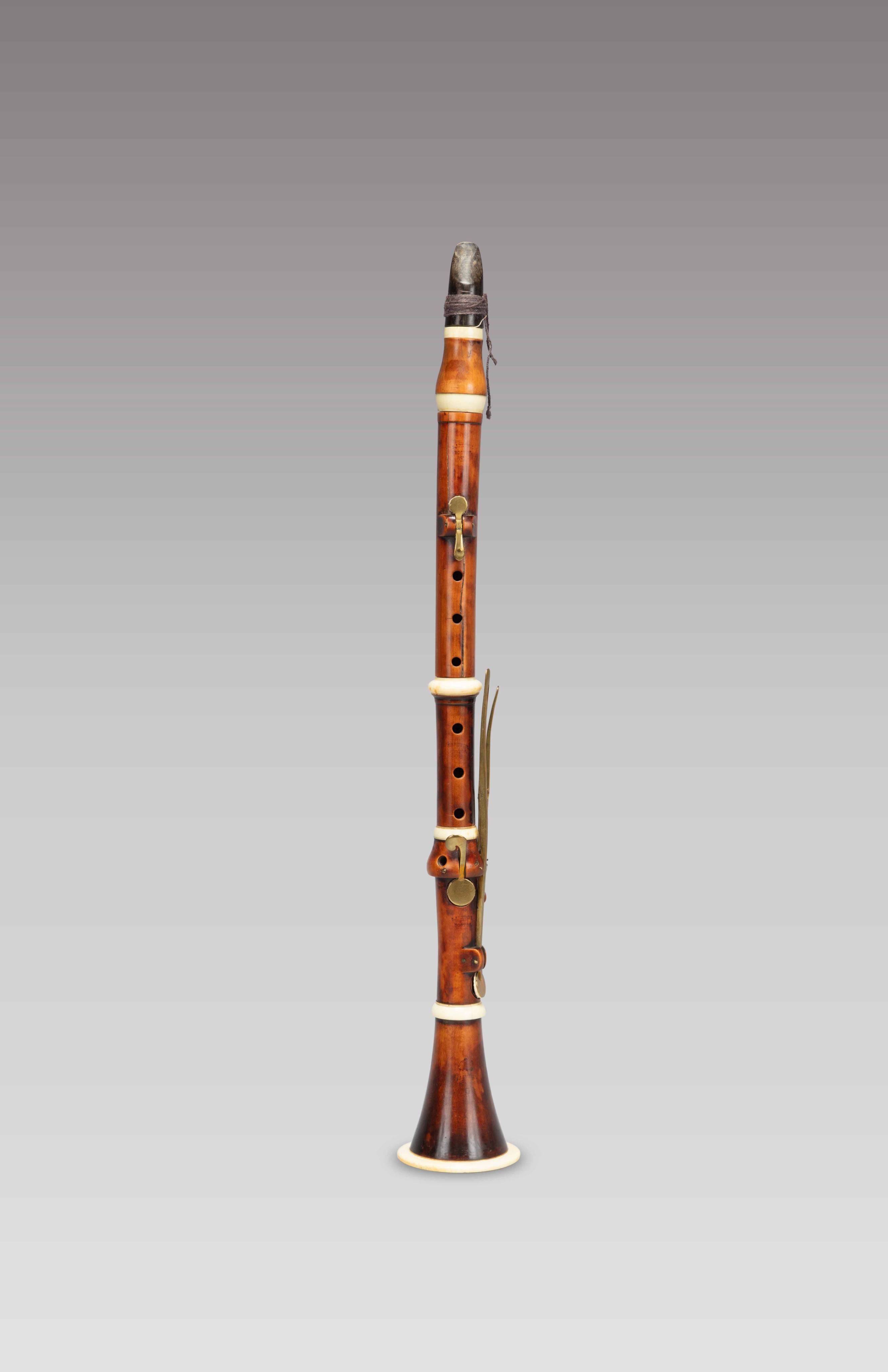
Clarinet, C
Maker
John Ashton
Date1820-1849 ca.
Place MadeBoston, Massachusetts, United States, North America
Serial No.None
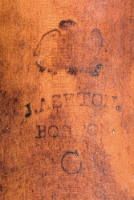
SignedBell: [eagle] / J. ASHTON / BOSTON / CBarrel and both lower joints: J. ASHTON / BOSTON
Upper joint: J. ASHTON / BOSTON / CDescriptionJohn Ashton was a music publisher and dealer, whose shop was near the thriving markets by Long Wharf in Boston. He purchased instruments made by others and branded them his own, like this clarinet made by Graves & Company of Winchester, New Hampshire. Made of boxwood with ivory rings, it has a small eagle stamped on the bell, like other woodwinds made by Graves. This instrument bears close similarities to English made clarinets and shows how American makers competed directly with their European counterparts by the mid-19th century. Graves was the first American instrument manufacturer to challenge European dominance in the U.S. market.
5 sections: barrel, top joint, middle joint, bottom joint, bell. Simple system; 5 keys with flat, round key flaps; boxwood body; ivory ferrules; brass keys; period mouthpiece with a long tenon. DimensionsAll joints measured excluding tenons
Length: 53.5 cm
Upper joint: 167 mm
Middle joint: 95 mm
Lower joint: 114 mm
Barrel: 52.9 mm
Bell: 103.4 mm diam. of bell: 79.5 mm
Mouthpiece: 54.5 mm
Bore at bottom of top joint: 12.4 mm
Bore at bottom of middle joint: 12.9 mm
ProvenanceThis clarinet was previously owned by R-G. Ingraham, dealer in band instruments and musical merchandise, located at 20 Oak Street, Portland, Maine, U.S.A., who died about 1900. He gave the clarinet to Mr. E. G. Williamson, of Rockland, Maine. Williamson donated the instrument to the National Music Museum in 1951. Published ReferencesJerry E. Kramer. _Clarinets Made between 1800 and 1880 from the Collections of the Shrine to Music Museum_, MM Thesis, University of South Dakota, 1983: 69; plate VIII p. 71; Appendix p. 177.
Deborah Check Reeves. "Historically Speaking." _The Clarinet_ 46, no. 1 (December 2018): 34-35.
Arianna Van Kley and Michael Suing. _Of Thee I Sing: Origin, Heritage, and Patriotism_. National Music Museum, 2026: 36-37.
Credit LineArne B. Larson Collection, 1979
Object number02768
On View
On view