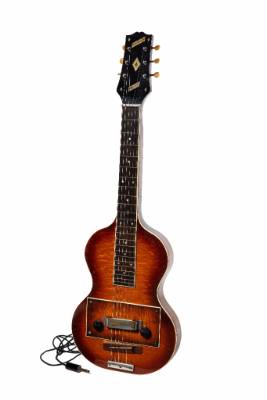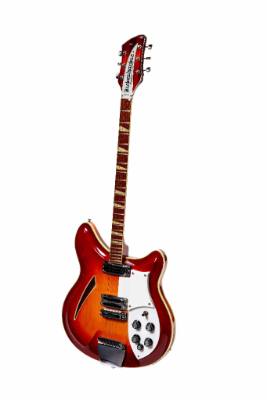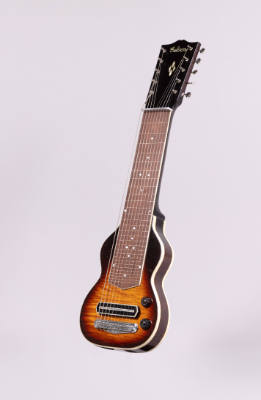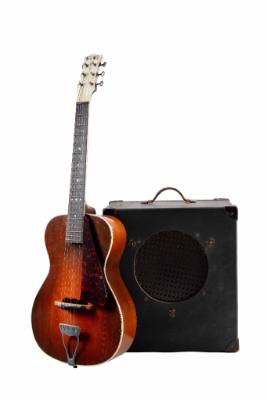

Electric Hawaiian guitar
ALTERNATE NAME(S)
- Electric lap-steel guitar
Date1934 ca.
Place MadeLos Angeles, California, United States, North America
ModelA-22 "Frying Pan"
Serial No.B232
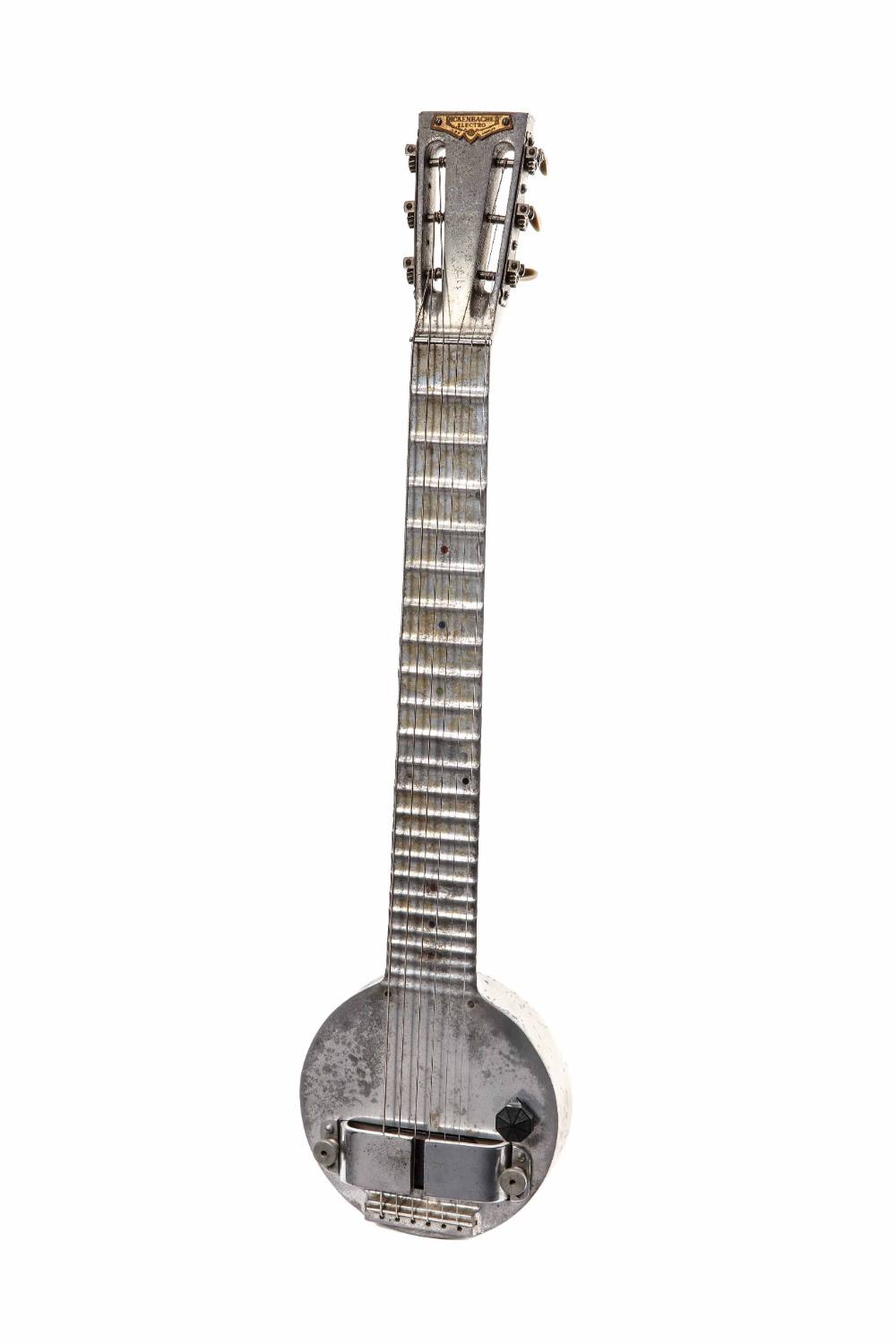
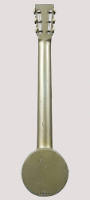
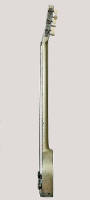
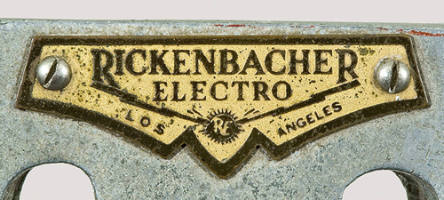
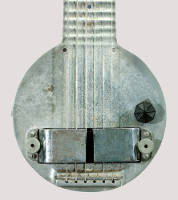
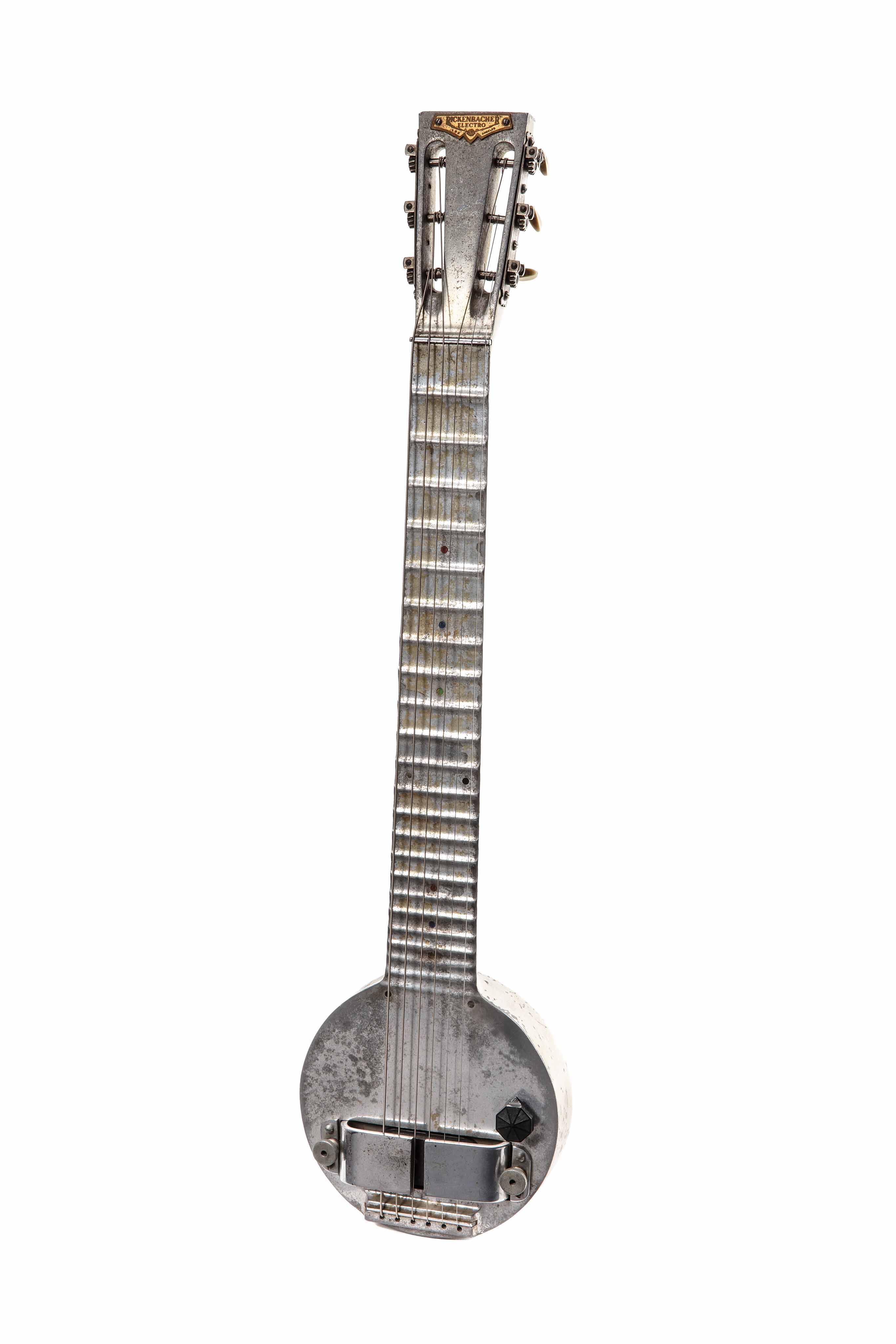
SignedOn a copper-colored metal nameplate screwed to upper end of front of headstock: RICKENBACHER / ELECTRO / RE [in flaming circle] / LOS ANGELESN.B. Rickenbacher, not Rickenbacker on this instrument. Gruhn notes (p.8) that “literature and advertising spelled Rickenbacker with a “k,” but headstock nameplate used the original spelling – Rickenbacher – until the 1950s.” Also, Adolph Rickenbacher (1892-1976) changed the “h” to a “k” to note his “distant kinship with WWI flying ace Eddie Rickenbacker.” (Gruhn, p. 9) (see also, Bacon 1994, p. 12)MarkingsStamped into upper end of headstock: B232DescriptionRickenbacker’s early electric Hawaiian guitars were made from aluminum and earned the nickname “frying pans.” The NMM’s example is a slightly smaller model, known as the A-22, for the 22-inch string length.
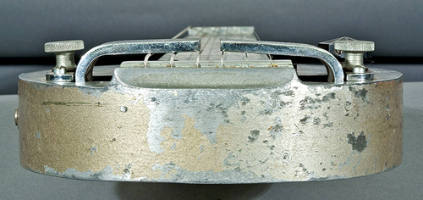
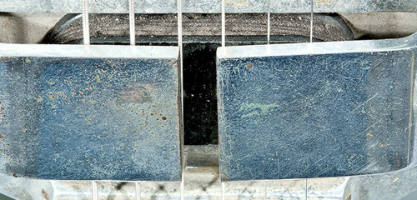
Made of cast aluminum by the Aluminum Alloy Casting Company. Rickenbacker was responsible for the electric pickup – a pair of horseshoe-shaped magnets surrounding a coil of wire which itself surrounds 6 individual magnets (1 at each string). This pickup was designed by George Beauchamp, a partner of Rickenbacker, who filed his patent on June 2, 1934, but wasn’t granted it until August 10, 1937 (#2,089,171). The cast aluminum was given a “lacquer wash,", some of which can be seen on the fingerboard and overall of the back of the instrument, as a “gold” color.
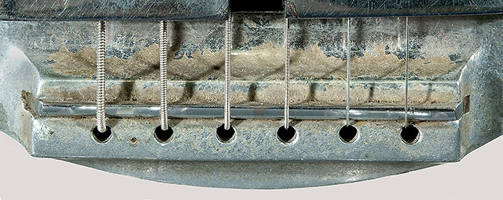
Stringing: six steel strings
Pickups: one single-coil horseshoe pickup; ; black plastic volume knob with triangular tab indicating position
Body, neck, and head: integral cast aluminum
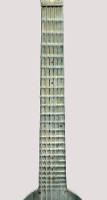
Fretboard: integral with body and neck; 23 cast, scalloped, raised frets; single red plastic dot position marker behind 5th and 17th frets; single blue plastic dot position markers behind 7th and 19th frets; single green plastic dot position markers behind 9th and 21st frets; double black plastic dot position markers behind 12th fret
Nut: nickel-plated steel
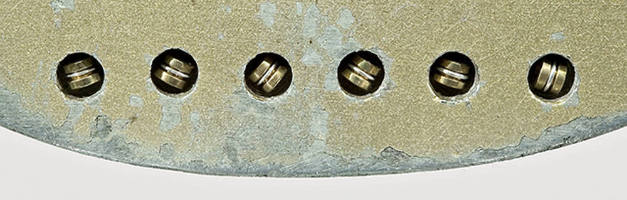
Bridge: integral with body; nickel-plated steel saddle
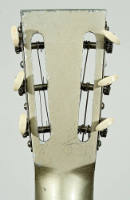
Tuners: two pairs of worm-gear machine tuners with nickel-plated steel plates, steel rollers, and white plastic heads
Pickguard: none
Finish: clear lacquerDimensionsTotal electric Hawaiin guitar length: 730 mm (28-3/4")
Back length: 177 mm (6-31/32")
Back width: 178 mm (7")
Side height (including edging): 40 mm (1-9/16")
Head length: 121 mm (4-3/4")
Head width, top: 72 mm (2-27/32")
Head width, bottom: 54 mm (2-1/8")
Neck length (nut to body): 412 mm (16-7/32")
Neck width, nut: 46 mm (1-13/16")
Neck width, body joint: 64 mm (2-17/32")
Vibrating string length (nut to bridge edge): 568 mm (22-3/8")
Scale length: 568 mm (22-3/8")ProvenancePurchased from George Gruhn Guitars, Inc., Nashville, Tennessee, by the Board of Trustees in 1995. Published ReferencesTimothy D. Miller. The Origins and Development of the Pedal Steel Guitar. M.M. Thesis. Vermillion: University of South Dakota, 2007.
“Instrumental Innovations,” Wall Street Journal (December 7, 2007), p. W4.
Credit LineBoard of Trustees, 1995
Object number05917
On View
On view