
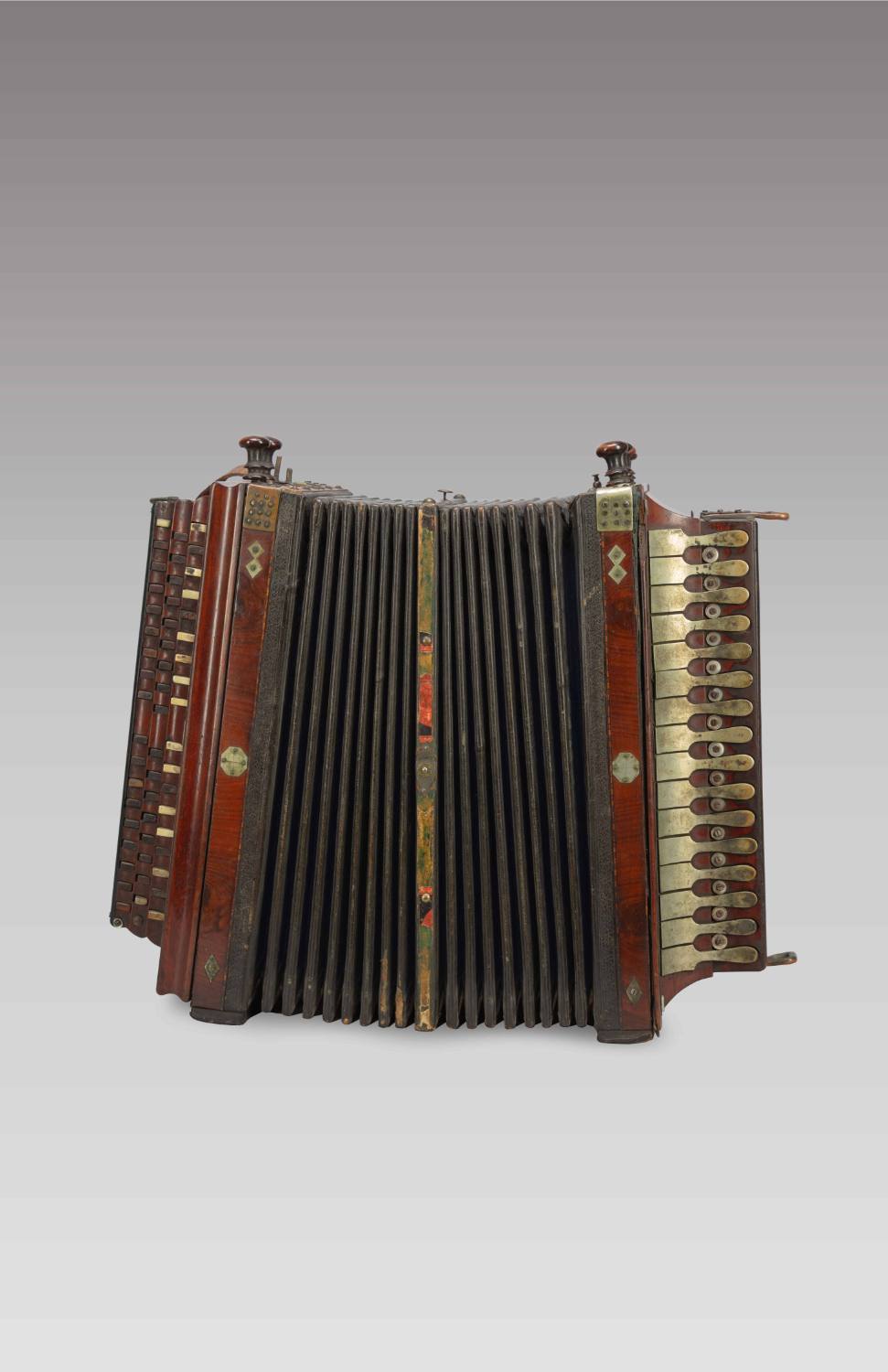


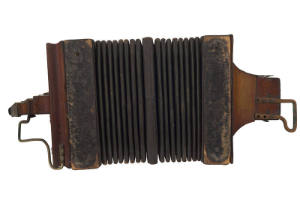
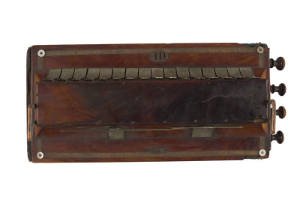
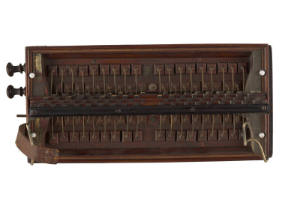

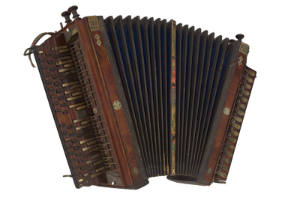

Diatonic button accordion
Maker
J. Pomm
Date1858 ca.
Place MadeBerlin, Germany, Europe
Serial No.None
SignedGreen paper labeled adhered inside treble casing, marked: Harmonika-Fabrik / von / J. Pomm / BERLIN Kurze Str. No. 20MarkingsEngraved on top of bass (left hand) side, as played: Constantin 1858 WetteringScratched into top of keyboard, bass (left hand) side, as played: (script) C. W.
Scratched into surface of metal badge tacked to bass side: 1858
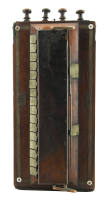
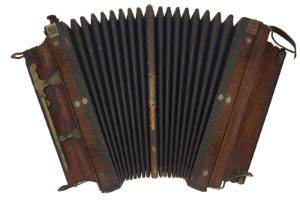
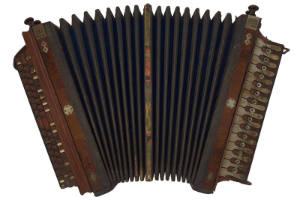
Reed plates and wooden combs are stamped variously with the number 1 through 8, and not necessarily in order or corresponding reed plate to comb.DescriptionLikely custom built for Constantine Wettering, this accordion is based on a central European design. Pomm created this hybrid keyboard by combining the button style with the latest innovation, the piano style — the layout of natural and accidental keys on pianos and other keyboard instruments. Chromatic accordions of any kind had (arguably) not yet been invented, but this instrument allowed Wettering to play in eight keys. After leaving home, he maintained a connection to his place of origin, Germany, as a professional musician, playing for growing immigrant communities in Chicago and New York City between 1858-1889. Many cultures thrive in the United States because of this connection to ancestral homelands.
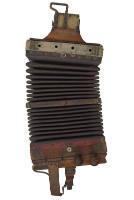
Made to play in 8 keys, it has 70 treble keys, and 16 bass keys. 16-fold bellows divided by a wooden frame, edged in stamped leather. Wooden casing in square profile decorated with mother-of-pearl, pressed metal and polychrome paper borders.Dimensions20 in (508 mm) x 9 in (228 mm) x 22 in (558 mm)ProvenanceAccording to Arne B. Larson, obtained from Fred Miller, Chicago, Illinois, 1955.Published ReferencesArianna Van Kley and Michael Suing. _Of Thee I Sing: Origin, Heritage, and Patriotism_. National Music Museum, 2026: 22-23.
Credit LineArne B. Larson Collection, 1979
Object number01273
On View
On view
1830-1840 ca.